BioLaMer
Year: 2023 - 2026
Partners: Advanced Materials and BioEngineering Research (AMBER) Centre & School of Chemistry, Trinity College Dublin, Ireland , ALMA MATER STUDIORUM- UNIVERSITA DI BOLOGNA- UNIBO, Italy, AquaInSilico LDA, Portugal, HEI-Lab Digital Human-Environment Interaction Lab, COFAC, Lusofona University, Portugal, NOVAID FCT, Portugal, Soclinetech Solutions Services, Cork, Ireland
The BioLaMer project seeks to address two significant global challenges, the increasing food waste challenge, and the petrochemical plastics pollution, by developing an innovative technology/design/route to produce biopolymers and added-value bioplastic products from low-grade food waste. To realize this goal, BioLaMer will demonstrate a novel proof of principle fly larvae bioreactor by establishing food eating black soldier fly (BSF) larvae (Hermetia illucens) as a high impact feedstock for cost-effective production of two biopolymers: polyhydroxyalkanoates (PHA) and chitosan.
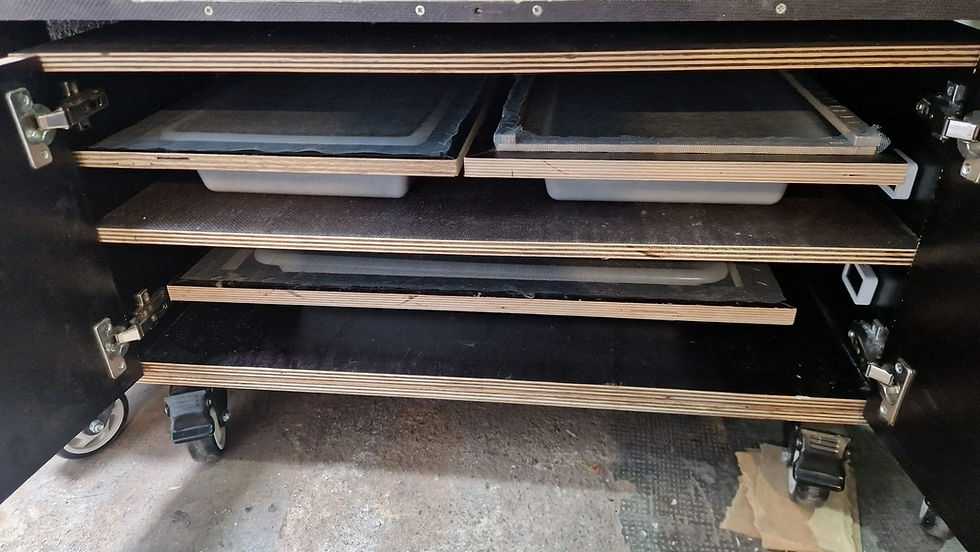
TransfoLAB BCN developed a functional prototype of a locally deployable fly larvae bioreactor, which has been designed and implemented with provision to control temperature, relative humidity, and light intensity and exposition time to provide adequate hatching and growth conditions for the BSF larvae and flies, as well as successful harvesting of BSF larvae in prepupae phase. This working prototype allows us to demonstrate the circular process and evaluate the design of the fly larvae cultivation bioreactor in terms of functionality, efficiency, and environmental footprint, and implement improvements when needed.
Based on two testing prototypes, a working protype has been designed and, consequently, built-up, that incorporates and improves all the previous findings. The working prototype has been tested and improved during two cycles of BSF larvae rearing and this report presents the final improved version.
In order to follow the natural reproduction and development cycle of the BSF flies and larvae, three separate modules have been distinguished and elaborated (explained below):
a. BSF egg and BSF BSF newborn larvae incubating module
b. BSF grown larvae rearing and prepupae phase module
c. BSF rearing from pupae, reproduction and egg harvesting module
Each module creates a specific environment for each phase of BSF's lifecycle, following their specific needs. Following the premises of the initial proposal, the bioreactors to be distributed locally in environments that regularly generate food waste (restaurants and cafes, canteens, urban gardens, residential buildings etc), all the 3 modules have been integrated vertically in a compact design. Even more so, the spatial availability of the potential hosts has been taken into account (it is foreseen that the bioreactor will probably be placed in a service area or communal area of the suggested hosts), thus a structure with manageable dimensions has been considered (the current working prototype measures 110x65x225cm, thus covering 0,72sqm of floor space and a total of 2 sqm is needed as operational surface). The proposed dimension can, on one hand, facilitate the transportation and displacement of the bioreactor if needed (the bioreactor is supported on heavy duty wheels). On the other hand, it offers sufficient space to accommodate a colony of +100.000 BSF larvae, that, according to an initial estimation, can provide a harvest of 5-10 kg of BSF larvae available to be processed in PHA and chitosan, and process +5kg of food waste daily during the growing stage of the BSF larvae up to 60kg of food waste converted in total during one full BSF larval growth cycle (which is an achievable amount in any given scenario).
Part of our tasks is also identifying and introducing local suppliers of food waste and consumers of the (by)products in the circular process, such as households, urban gardens and restaurants. Consequently, we established relationships to feed the locally deployed fly larvae cultivation plant, as well as relations with locally distributed urban gardens, public and private parks, green-houses, plant nurseries etc, in order to offer the by-products of the process, such as substrate and liquid frass, which can potentially be used as fertilizers.
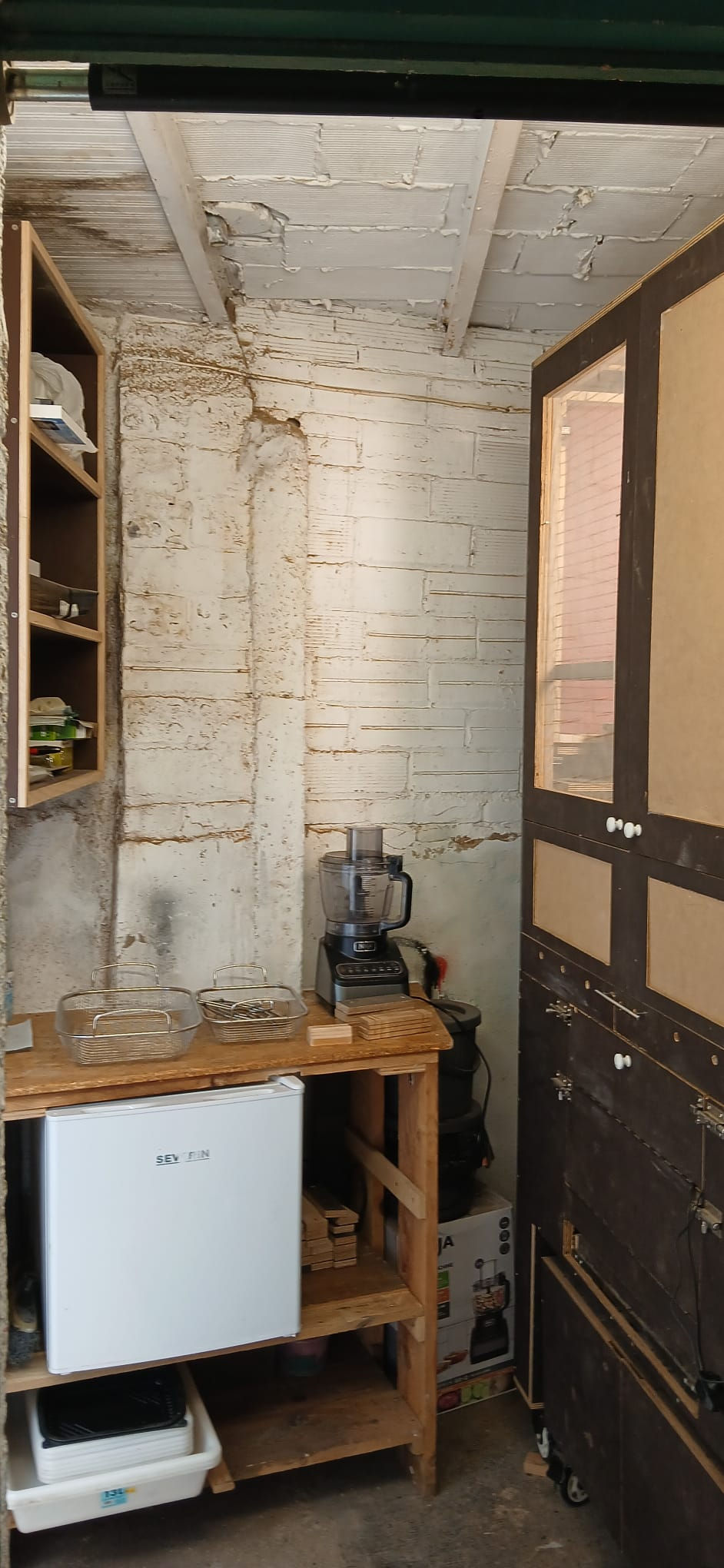
For the purposes of the project we established the BioLaMer Lab within the TransfoLAB BCN premises. This dedicated space was set up to house both the test and operational prototypes, allowing them to be isolated from other ongoing activities at the centre. The lab also centralises all the tools and equipment required for substrate preparation, food waste input management and daily maintenance tasks. It also serves as a control centre where all key parameters and observations can be monitored and recorded in a structured manner throughout the process.
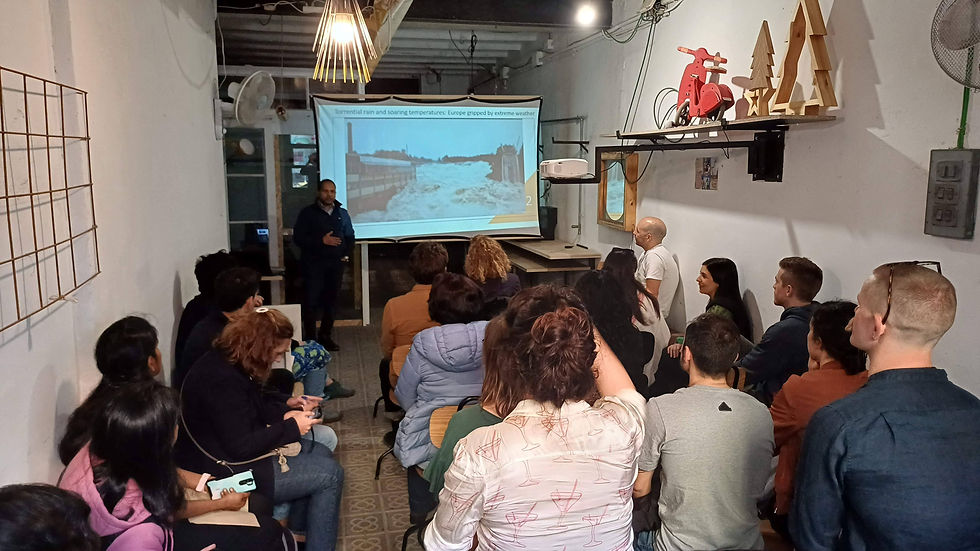
BioLaMer was demonstrated through the involvement of scientific stakeholders, communication and circularity demonstration partners. For this purpose several activities and events were organised among which: the 4th edition of TrashTalks - Organic Matters, the 6th edition of Trash Investigation Series - Organic Matters and the Open Doors as part of the European Week of Waste Reduction 2025.
This project is supported and funded by the European Innovation Council (EIC) through its EIC Pathfinder Open funding, established under the EU Horizon Europe programme.

![TransfoLAB’s_bioreactor_(2)[1].png](https://static.wixstatic.com/media/b63560_e8b495160c4c48618384acf5e69bd66e~mv2.png/v1/fill/w_980,h_693,al_c,q_90,usm_0.66_1.00_0.01,enc_auto/b63560_e8b495160c4c48618384acf5e69bd66e~mv2.png)